



There is no correct number. Most couples in Ireland spend somewhere between €1,000 and €5,000, with survey data putting the national average closer to €3,600, but that figure means very little on its own. What matters is what the ring is for: a promise, made in a moment that's yours alone, not a line item to be benchmarked against anyone else's.
We know that's not always the answer people are looking for when they type the question into Google at midnight. So let's actually talk it through: where the "rules" came from, what people are really spending, and where your money goes furthest.
Where did the "two months' salary" rule even come from?
Nowhere sentimental, that's for sure. It was a De Beers advertising line from the 1930s and 40s, later stretched to three months by copywriters (thanks Don Draper) who liked the sound of it. It was never a tradition. It was never a financial principle. It was a sales target dressed up as etiquette, and it has been quietly shaping (and inflating) engagement ring budgets for the better part of a century.
Ignore it. A ring bought under pressure to hit some imagined multiple of your salary rarely feels like what it's supposed to feel like. The couples we see who are happiest with their choice are the ones who set a number that fits their actual life first, then found the right ring within it.
What are Irish couples actually spending?
A 2025 Aviva Ireland survey of ring owners found the average spend on an engagement ring here is around €3,600, with the majority of couples landing somewhere between €1,000 and €5,000. Spend climbs well beyond that for some, and plenty of beautiful rings come in well under it. Both are completely normal. The "average" is a data point, not a target.
What actually moves the price:
- The metal: platinum costs more than gold, and 18k gold costs more than 9k or 14k, simply because there's more precious metal in the alloy.
- The diamond's 4Cs: cut, colour, clarity and carat weight all interact. A well-cut diamond with a slightly warmer colour grade can look every bit as bright as a "perfect" one, for meaningfully less.
- The setting: a solitaire is typically the most cost-efficient way to show off a stone; halo and multi-stone settings cost more but can also make a smaller centre stone read bigger.
- Natural versus lab-grown: this is where the real savings are, so it's worth its own section.
Lab-grown diamonds: the actual cost benefit
This is the single biggest shift in engagement ring budgeting in the last few years, and it's worth being direct about it.
A lab-grown diamond is chemically, physically and optically identical to a mined one. It's carbon, grown under heat and pressure rather than found underground, then cut, polished and graded exactly the same way, by the same certification bodies. Under a loupe, even a jeweller can't tell the two apart without specialist equipment.
What you can tell apart is the price. Lab-grown diamonds typically run 60–80% less than a natural stone of comparable size and quality, and that gap has only widened as lab-growing technology has matured.
In practice, that means one of two things for your budget:
- The same look, for meaningfully less: freeing up that money for the setting, the metal, or simply not stretching yourselves to afford the ring.
- A noticeably bigger, higher-clarity stone for the same money: a carat weight or clarity grade that would be well out of reach in a natural diamond at the same price point.
There's no downside dressed up as a compromise here. It's not a "budget option" in the way a lower grade of anything else might be. It's the same diamond, grown rather than mined, at a fraction of the cost. That's why we work almost exclusively in lab-grown diamonds at Chupi: the value case is simply too strong to ignore, and it means more of your budget goes toward the ring itself rather than the rarity premium of how the stone came to exist.
So, what should you actually spend?
Only what sits comfortably within your own finances, with nothing borrowed to make a bigger number happen. A ring that starts a marriage with financial strain isn't romantic, whatever the carat weight.
A few honest questions are more useful than any average:
- What can you spend without touching savings you'll need for the wedding, a deposit, or simply peace of mind?
- Does your partner care more about size, sparkle, or the story behind the piece?
- Would a lab-grown diamond let you go up a carat size, or bring the whole thing in well under budget?
If you're not sure where to start, that's exactly what we're here for. Come and talk to us, in our Dublin Store or drop us an email, no pressure, no upsell, just an honest conversation about what's possible at your number.
Related Pieces


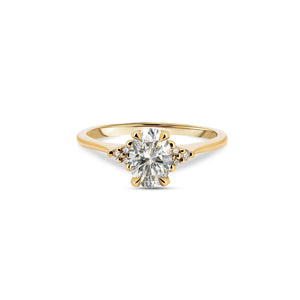
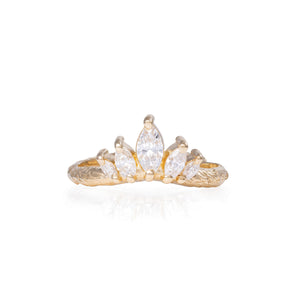
Starlight Oval Diamond Engagement Ring 14k Gold

